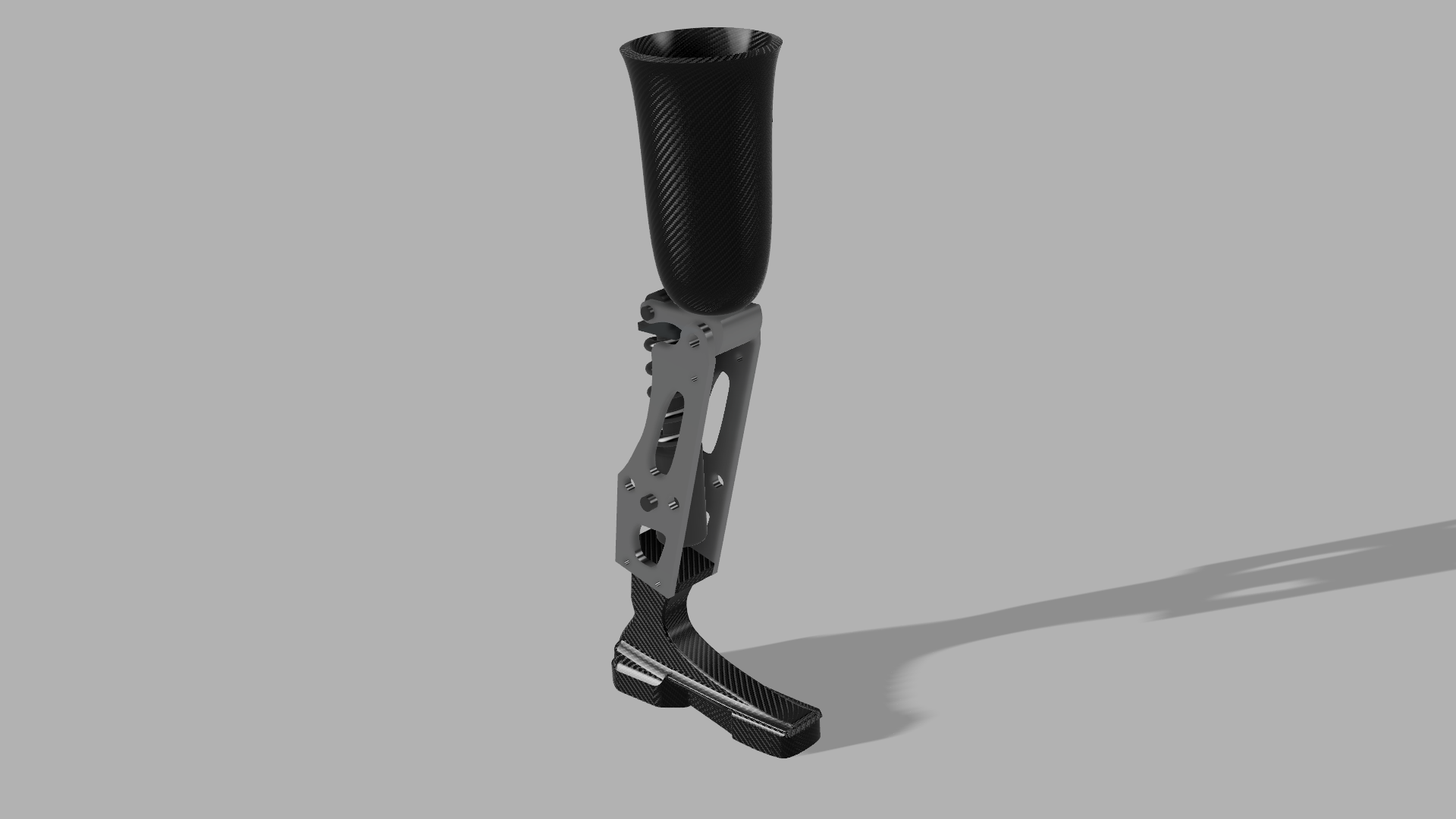
Assembly Render
Overall system scaled to rider anthropometrics and aligned to DIN binding geometry for safe release and consistent flex.
I focused on achieving anthropometric fit, ensuring the prosthetic foot interfaces correctly with ski bindings, and verifying mechanical integrity so stress and strain remain within safe limits under rider weight.
Click any image to view full-size
Overall system scaled to rider anthropometrics and aligned to DIN binding geometry for safe release and consistent flex.
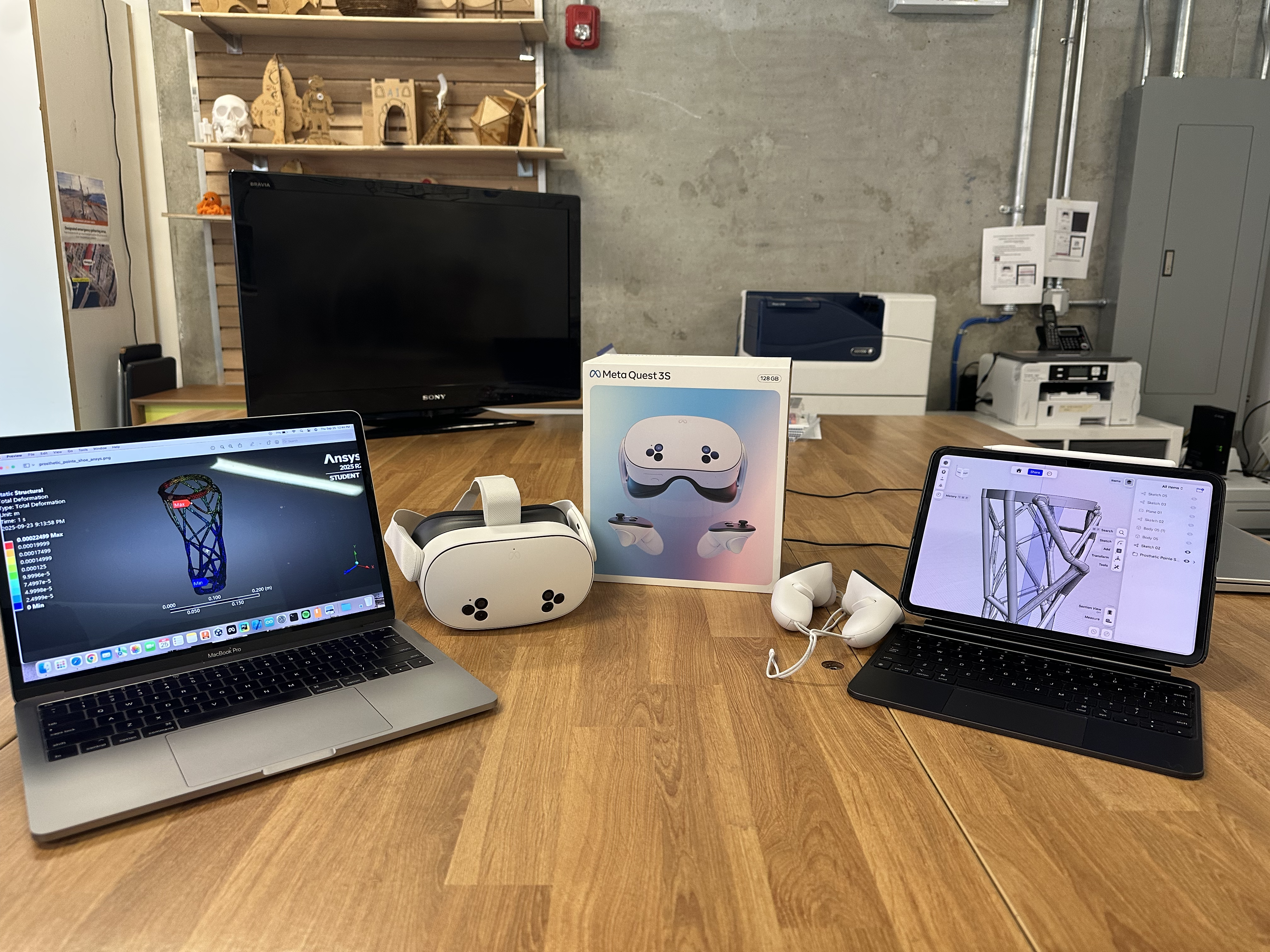
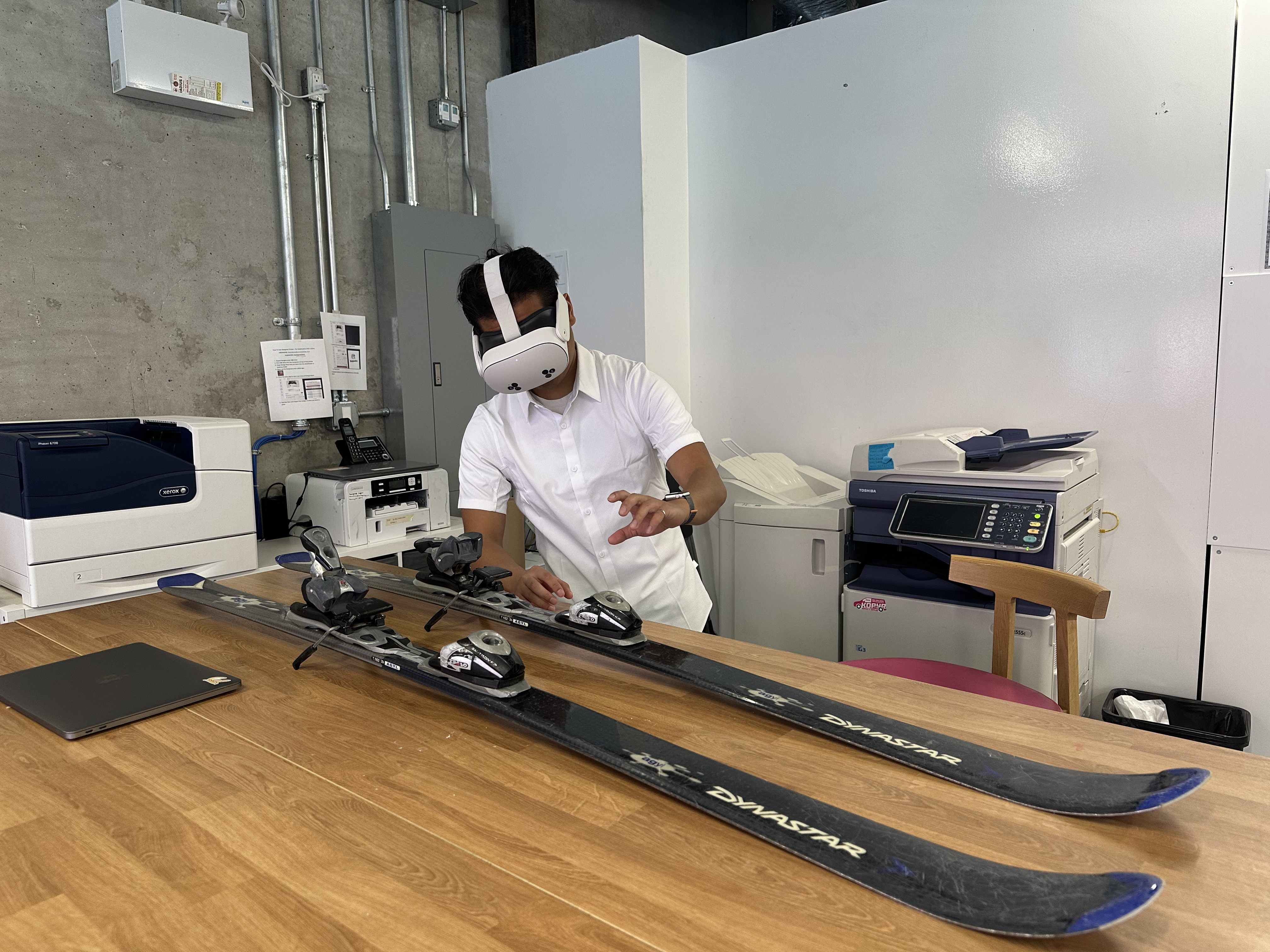
Augmented Reality Tools to determine anthropometric fit using a Meta Quest 3S to visually see rider height in real time.
Front view shows stance geometry and binding clearances optimized for both comfort and mechanical balance.
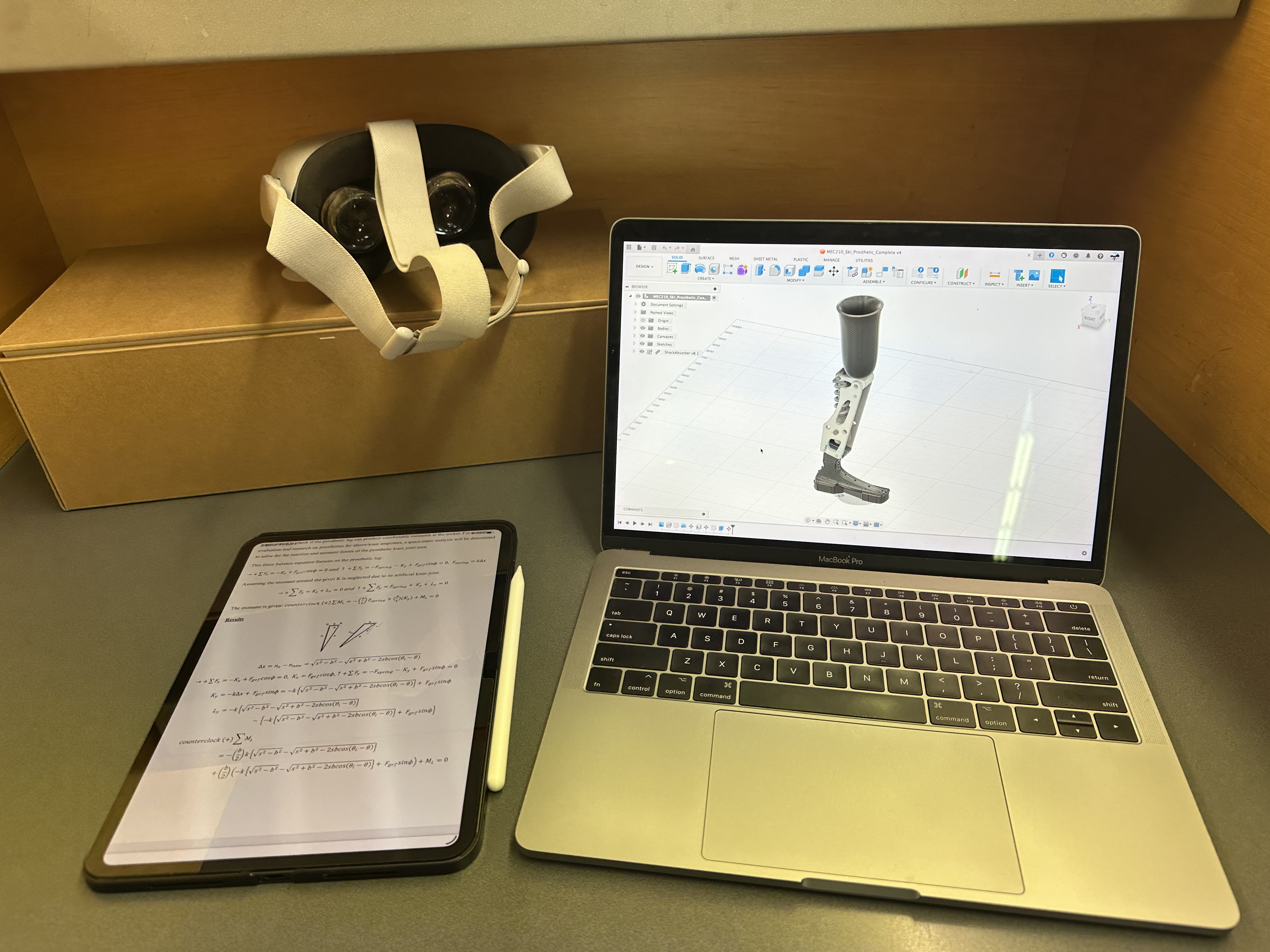
Using Fusion 360 and SolidWorks for Generative Design to optimize material usage for the tibia frames.
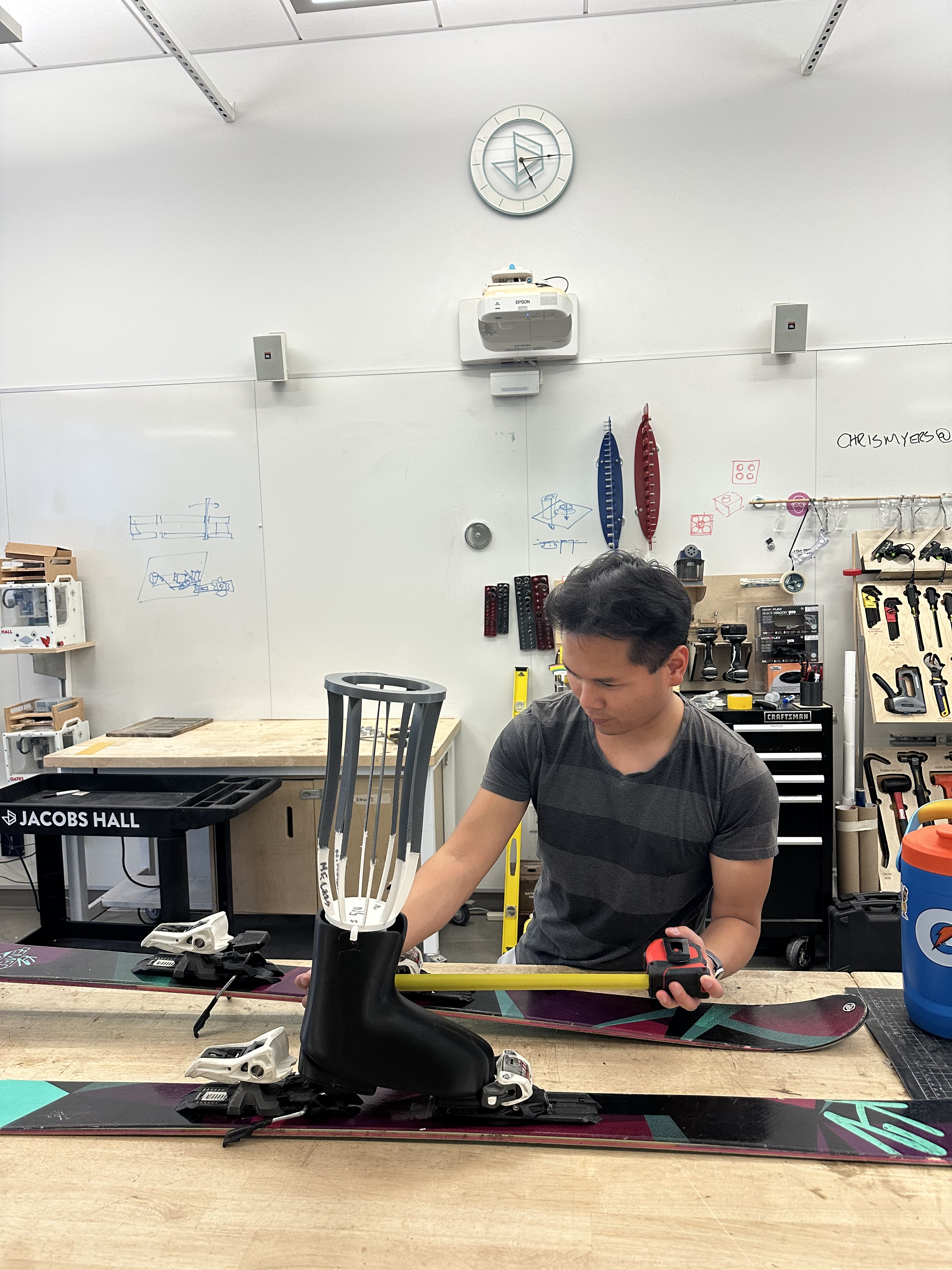
Bench tests applied vertical and torsional loads to confirm that stresses match FEA predictions within safe limits.
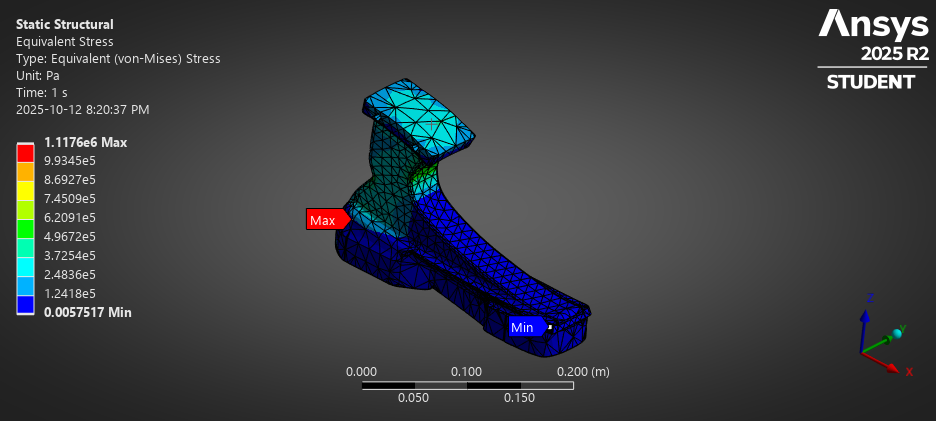
ANSYS results visualizing stress distribution and deflection under skier load; informs material selection and geometry refinement to maintain safety factors > 2×.
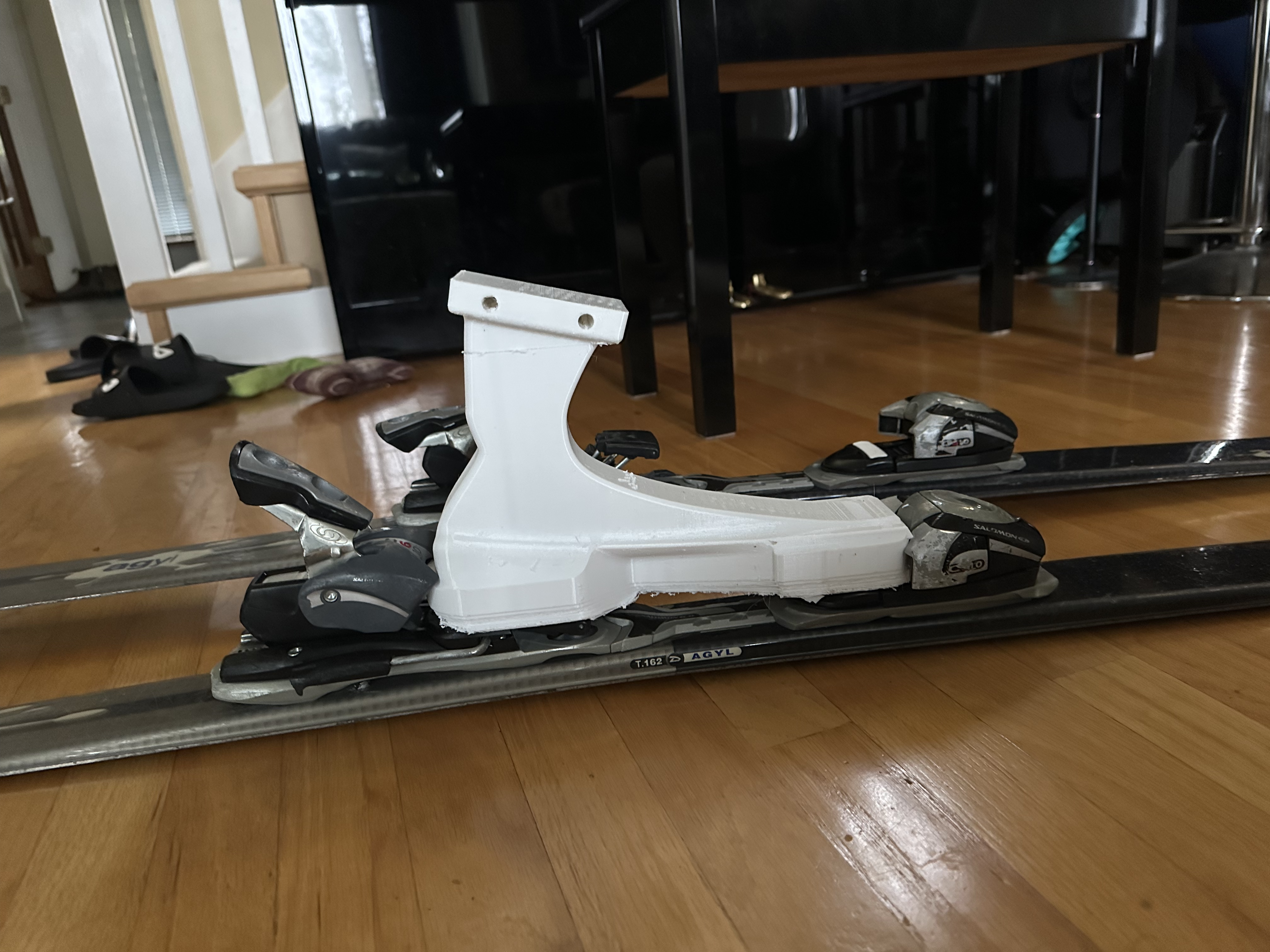
Printed prototype validates fit, binding lock-in, and ergonomic interface; enables quick iteration on tolerances prior to metal fabrication.
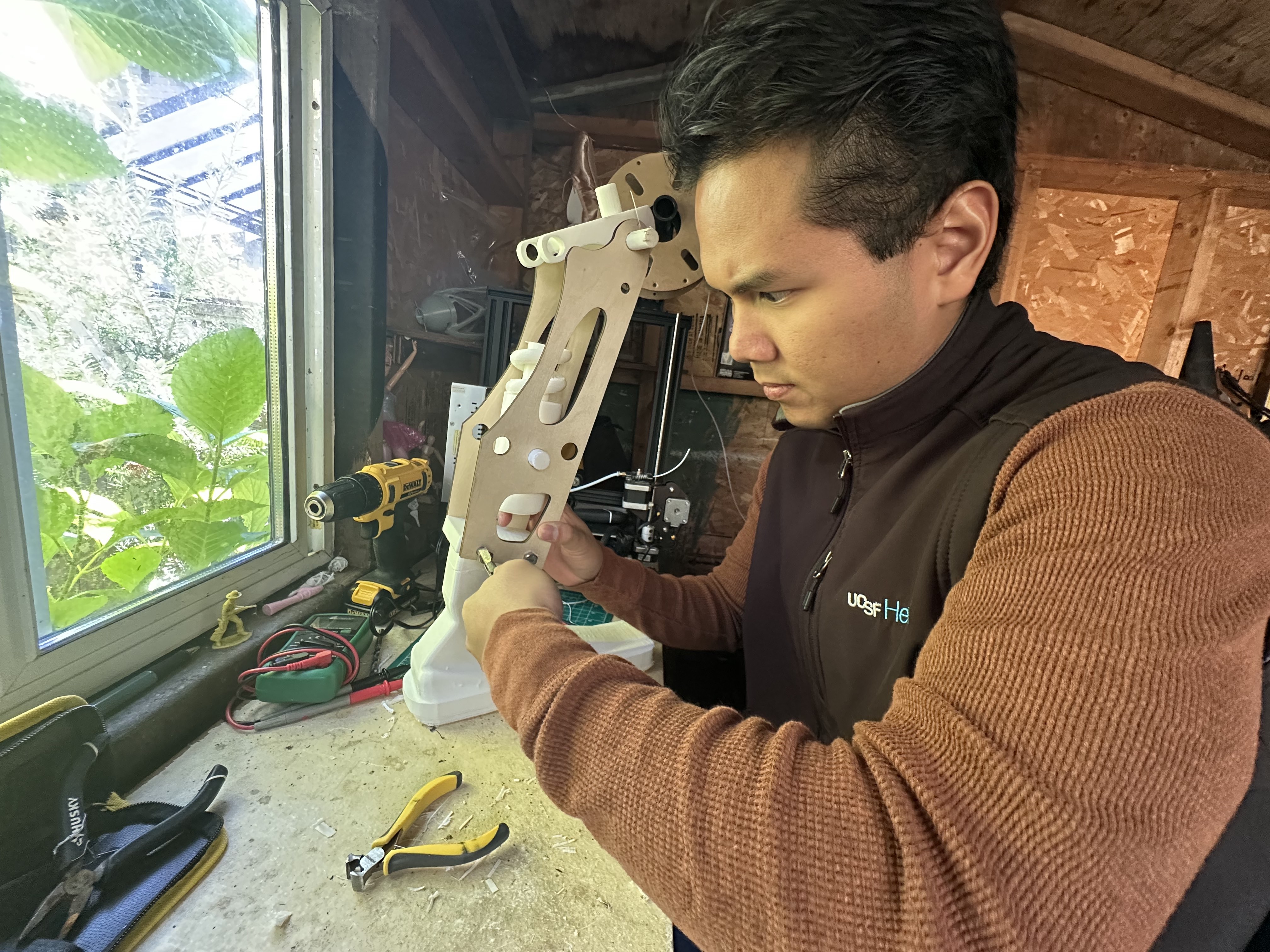
After 3D printing and laser cutting the tibia frame, I started assembling the prosthetic. I chose to use 5/16 bolts, with washers and nuts, to provide a strong clamping force—adding strength and security around the ankle region of the ski prosthetic.
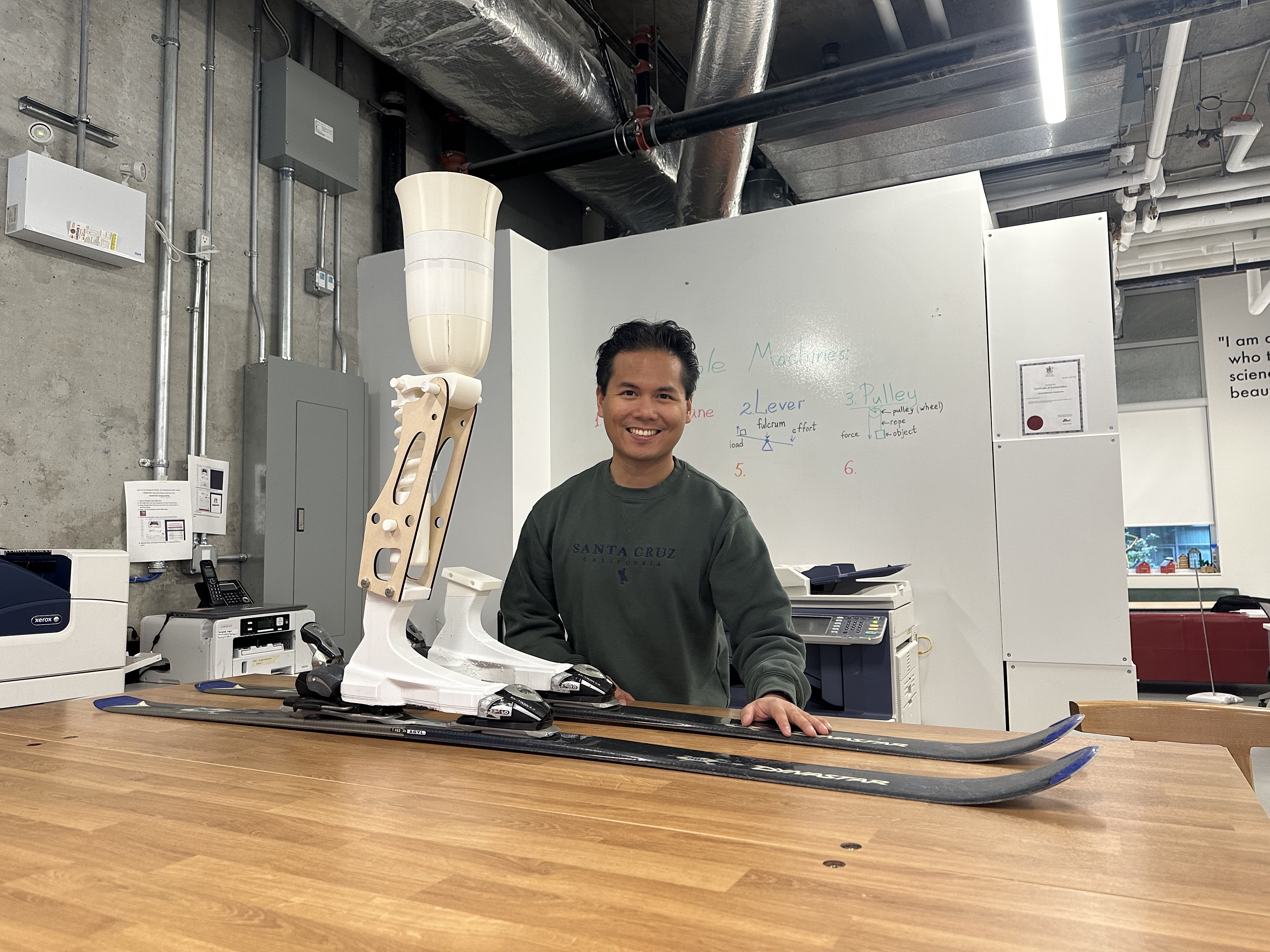
Finished creating the first functional prototype that binds the ski prosthetic to the skis.

Final concept render of the Black Diamond prosthetic ski leg in action on the slopes.